
Why Most Restaurants Fail in the First Year (And How to Avoid the Same Mistakes)
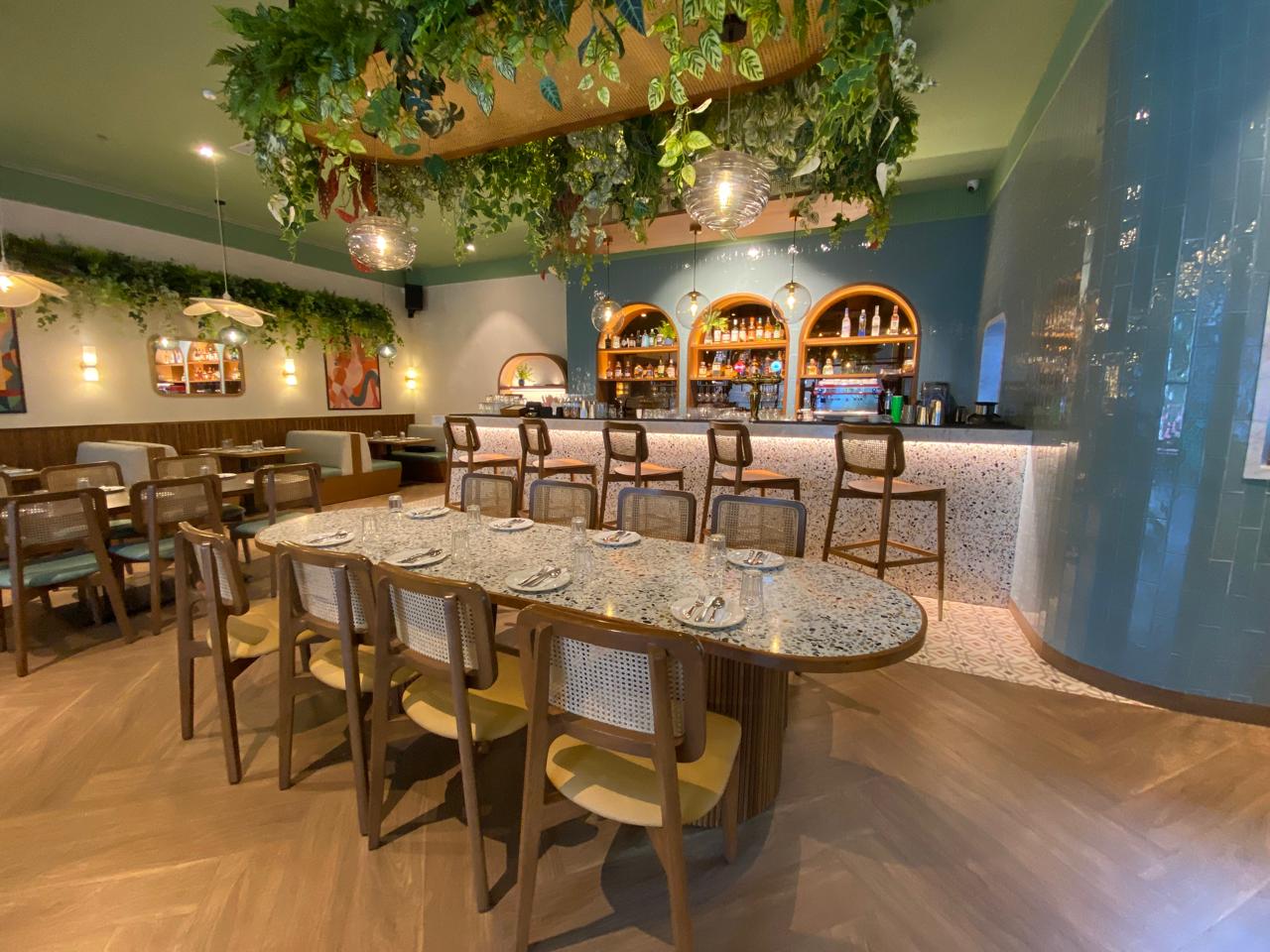
There's a particular kind of restaurant you've probably eaten at without realising it was in trouble.
It's busy. The tables fill up by 8 pm, the kitchen is slammed, and the staff is running. From the outside, it looks like a hit. And yet, eleven months later, the shutters are down, and there's a "To Let" board where the menu used to be.
If you've ever wondered how a place that seemed so full could quietly go under, you're asking the right question. Because the restaurants that fail in their first year almost never fail the way people imagine. It's rarely one dramatic disaster. It's usually a slow leak that the owner doesn't notice until the money is already gone.
This is a look at why that happens, what actually goes wrong in those first twelve months, and — more usefully — the mistakes you can see coming and step around. We'll be honest about the numbers too, because most of what gets repeated about restaurant failure simply isn't true. First, let's kill the number everyone repeats
You've heard it. "Ninety percent of restaurants fail in the first year." It gets quoted in news articles, on cooking shows, in investor meetings, and at dinner parties by people who've never run a kitchen.
Here's the thing: it isn't true, and it never was.
So what's the real first-year failure rate?
The most careful research we have comes from a study led by Dr. H.G. Parsa, published in the Cornell Hotel and Restaurant Administration Quarterly. His team tracked more than 2,400 restaurants over several years. What they found was that roughly 26% of restaurants failed in their first year — not 90%. The rate dropped to about 19% in the second year and 14% in the third. Painful, yes. But nowhere near the myth.
Other independent studies land in a similar range — somewhere between 15% and 30% for year one. The National Restaurant Association in the US has long treated around 30% as a normal industry figure.
So the honest headline is this: roughly one in four new restaurants doesn't make it through year one. That's a serious risk you should respect. It is not a near-certain death sentence.
Why the "90%" myth won't die
The 90% figure appears to trace back to a 2003 American Express commercial — not a study, not a dataset, just an advertisement that got repeated until it started to feel like a fact.
And it does real harm. When lenders and investors believe most restaurants are doomed, serious founders struggle to raise money or end up paying higher interest. Parsa himself pointed out that if 90% of restaurants really failed every year, we'd see the total number of restaurants shrinking dramatically over time — and we simply don't. The industry keeps growing.

The truth about India's numbers
Here's where a lot of Indian blogs quietly overreach. You'll see confident claims that "60%", "73%", or "80%" of Indian restaurants fail in year one. Dig into those, and most have no real source — one widely shared article even admits its own figure was stitched together from "several studies combined."
The truth is that India doesn't have a clean, published first-year restaurant failure rate. Anyone quoting you a precise percentage is usually guessing. What we can say with confidence is that a meaningful share of new Indian restaurants close early, and — this is the important part — the reasons they close are remarkably consistent and largely preventable.
That's where your attention belongs. Not on the scary statistic. On the mechanism.
Failure is rarely one bad day — it's a slow bleed
Picture two lines on a graph. The top line is your monthly revenue. The bottom line is your monthly profit.
In most failing restaurants, the revenue line looks fine. Tables are full, orders are coming in, the aggregator dashboard shows healthy numbers. But underneath, the profit line has been drifting downward for months — a little more spent on ingredients here, a discount campaign there, a wasted delivery, an overstaffed shift. None of it feels fatal on its own.
Then one month the rent is due, a supplier wants paying, salaries are on the horizon, and there simply isn't enough in the account. That's the day it "fails." But the failure actually happened slowly, quietly, over the previous nine months. The owner was just looking at the wrong line the whole time.
Almost every reason below is really a version of the same story: a small leak nobody plugged. Keep that in mind as we go.
The real reasons restaurants fail in the first year
1. The numbers never worked from day one
Some restaurants are doomed before they open their doors, because the basic economics were never sound. The most common culprit in India is rent that's too high relative to realistic revenue.
A useful rule of thumb: rent should sit somewhere around 8–12% of your sales. When an owner falls in love with a "prime" location and signs a lease at ₹3–4 lakh a month, that space now has to generate ₹30–40 lakh in monthly sales just to keep rent in a healthy range. For a mid-sized outlet, that's often fantasy. The lease alone eats the business alive, no matter how good the food is.
The fix isn't glamorous: do the math before you sign anything. Model your covers, your average bill, your best and worst months. If the numbers only work on your most optimistic day, they don't work.
2. Food cost quietly creeps out of control
Food cost is the single number most new owners underestimate. For most Indian restaurants, food cost should land around 28–35% of the menu price. Sounds simple — but it drifts.
A recipe says 200g of chicken per portion; the cook, eyeballing it, uses 280g. Over a hundred plates, that's kilos of extra meat you paid for and gave away. Multiply that across every dish, every day, and a restaurant that thinks it's running at 32% food cost is quietly running at 42%. That 10% gap is often the entire difference between profit and loss.
The owners who survive treat recipe costing as a discipline, not a chore. They know what each dish costs to the rupee, and they check it. (If you want to go deeper on this, it deserves its own read on what a healthy food cost percentage looks like and how to cost a dish properly.)
3. Discount dependency disguised as growth
This one is worth slowing down for, because it's the trap that catches the most promising-looking restaurants.
A new outlet launches on Swiggy and Zomato with aggressive offers — 50% off, buy-one-get-one, free delivery. Orders pour in. The dashboard looks incredible. The owner feels like a genius. What they don't feel, yet, is that many of those orders are losing money. After the discount, the aggregator commission, packaging, and ad spend, a ₹400 order can net the kitchen almost nothing — sometimes less than nothing.
The customers who came for a 50% deal don't come back at full price. So the offer can't stop. And the day it does, the "growth" evaporates, revealing a business that was never actually profitable — just busy.
Real growth is built on customers who choose you at a price that pays you. Discounts are a tool for a moment, not a strategy for a business. Learning to grow without leaning on permanent offers is one of the hardest and most important shifts a restaurant makes — and it's exactly the philosophy that separates the places still open in year three from the ones that burned bright and closed. (There's a lot to say on growing a restaurant without relying on discounts, and it's worth its own deep dive.)
4. The location was wrong for the concept
Not "bad" location — wrong location. A fine-dining concept in a college-crowd neighbourhood. A quick, cheap tiffin service on a high-rent boutique street. A dessert café tucked into a lane with no footfall and no delivery density.
Location failure is really a mismatch between who walks past your door and who your food is for. A place can be beautifully run and still starve because the people around it were never going to be its customers.
Before committing, walk the area at different times. Count the footfall. Look at who's eating nearby and what they're paying. Ask whether delivery demand exists here, because for many concepts today the "location" that matters most is your delivery radius, not your street.
5. Everything lives in the owner's head — no systems
In the early days, the owner is the system. They know the recipes, the suppliers, the regulars, the shortcuts. It works — right up until they get sick, or try to open a second outlet, or a key cook quits and walks out with all the knowledge in his head.
Restaurants that survive write things down. Not because paperwork is fun, but because standard operating procedures are how quality survives a bad day. How much of each ingredient goes in. How the kitchen opens and closes. Who checks the stock. What "done right" looks like when the owner isn't watching.
You don't need a corporate manual on day one. You need the ten things that break most often, written down clearly enough that a new hire can follow them. That's the seed of a business that can run without you — which is the only kind that can grow.
6. A menu that's too big and trying to please everyone
New owners often think a longer menu means more customers. In practice, a bloated menu means more inventory, more waste, slower kitchens, inconsistent dishes, and confused diners.
Every extra item is another ingredient to stock (and spoil), another recipe to standardise, another thing the kitchen can get wrong under pressure. Restaurants that thrive usually do a focused set of dishes extremely well. The ones that struggle try to be a North Indian, Chinese, Italian, and continental restaurant all at once — and end up being none of them convincingly.
If a dish doesn't sell, doesn't make money, or drags down the kitchen, it's costing you even when nobody orders it. Cutting it is usually a gift to your margins and your quality.
7. Marketing treated as an afterthought
Plenty of owners pour everything into interiors and equipment, then assume "good food will speak for itself." Good food is necessary. It is not, by itself, a marketing plan.
If people don't know you exist, can't find you online, or can't tell what makes you worth trying, the food never gets a chance. In the first months especially, you need a steady, simple presence — a well-set-up Google Business Profile, clear listings, decent photos, and a reason for someone to choose you tonight. It doesn't need a big budget. It needs consistency and a clear identity.
The failure here is rarely "bad marketing." It's no marketing, discovered too late.
8. Running out of cash before the business finds its feet
Even a fundamentally sound restaurant needs time to build a regular crowd — often six to eighteen months to truly find its rhythm. The businesses that die young frequently had a workable model and simply ran out of runway before it kicked in.
The classic mistake is spending the entire budget on setup — fit-out, equipment, launch — with nothing held back to survive lean early months. Then a slow monsoon quarter arrives, and there's no cushion.
A healthier approach keeps enough working capital to cover several months of full operating costs after opening. Knowing your break-even point — the sales level where you stop losing money — turns this from a vague worry into a number you can actually manage toward.
9. Inconsistency — the silent killer of repeat customers
A customer's first great meal earns you a second visit. Their second great meal earns you a habit. But one bad, careless plate can quietly end the relationship — and they usually won't complain. They just don't come back, and they mention it to friends.
Inconsistency is what happens when there are no systems (see #5) and a stretched kitchen. The biryani is perfect on Tuesday and oily on Saturday. The portions shrink when the cook is in a hurry. Delivery arrives cold because nobody owns the packaging standard.
Repeat customers are the cheapest, most profitable business you'll ever get. Losing them silently, one disappointing plate at a time, is how a restaurant bleeds out without ever seeing an empty dining room.
10. Ignoring the data that was there all along
The frustrating truth about most first-year failures is that the warning signs were visible for months. The food-cost creep showed up in the numbers. The unprofitable discount orders were on the dashboard. The falling repeat rate was measurable.
Owners who survive look at their numbers weekly — sales, food cost, the items that sell, the hours that don't, the rising and falling ratings. Owners who fail often avoid the numbers precisely because they're stressful, and by the time they're forced to look, the story is already written.
You don't need to be an accountant. You need to look regularly and honestly at a handful of figures. The dashboard was trying to warn you the whole time.
A quick self-check: is your restaurant heading for trouble?
If you're already open and something feels off, these are the early warning signs worth taking seriously. The more that apply, the sooner you want to act:
You're busy, but there's never enough cash at month-end.
You don't actually know your food cost percentage this month.
A large share of your orders come from discounts or offers you can't stop.
Rent takes more than about 15% of your monthly sales.
Key processes live only in your head or one employee's.
Your best-selling dishes aren't your most profitable ones (and you're not sure which is which).
Repeat customers seem to be thinning out.
You avoid looking at your reports because they stress you out.
None of these is fatal on its own. Together, they're the slow bleed described earlier — and every one of them is fixable if you catch it early.

How to avoid the same mistakes
The good news hiding inside all of this: almost every common cause of failure is a decision, not bad luck. Which means it can be decided differently.
Before you open
Get the economics right on paper first. Model realistic revenue against rent, food cost, labour, and overheads — using conservative numbers, not your best day. Choose a location that fits your concept and your customers, not just your ego. Design a tight menu you can cost and cook consistently. And hold back enough cash to survive the slow early months.
In the first 90 days
Cost every dish and track your real food cost weekly. Set up simple systems for opening, closing, prep, and stock before habits harden. Build a basic marketing presence — listings, profile, photos, a clear identity — so people can find and choose you. Watch your channel mix carefully, and resist the urge to become dependent on permanent discounts, however good the early order volume looks.
The habits that keep you open
Review a handful of numbers every single week. Protect consistency like it's the product it actually is. Prune the menu when items don't earn their place. And treat customer retention — the people who come back — as the real engine of profit, because it is.
Already struggling? What you can still do
If you're reading this from inside a restaurant that's wobbling, don't panic, and don't assume it's over. A restaurant that's busy but unprofitable is often far more fixable than an empty one, because the demand is already there — the leak is internal.
Start by finding the leak. Cost your top ten dishes and see which are quietly losing money. Look hard at how much of your revenue depends on discounts, and what happens to the math without them. Check your rent-to-revenue ratio and your food-cost percentage against healthy ranges. Very often, a struggling restaurant doesn't need more customers — it needs to stop losing money on the customers it already has.
Sometimes the fix is a smaller menu. Sometimes it's re-pricing. Sometimes it's weaning off aggregator discounts and rebuilding direct, full-price demand. These are unglamorous, spreadsheet-level changes — and they're often what turns a sinking outlet around.
When an outside pair of eyes helps
Here's an uncomfortable pattern: the owner is usually the last person to see the leak. You're too close, too tired, and too emotionally invested to read your own numbers coldly.
That's why a lot of restaurants bring in an outside perspective at some point — someone whose job is to look at the food costs, the menu, the pricing, the aggregator strategy, and the operations without any of the founder's blind spots. This is the core of what restaurant consultants, including teams like Satiate Kitchens Consulting, tend to focus on: not adding more marketing spend, but finding where profit is quietly leaking and fixing the underlying economics.
You don't necessarily need that on day one. But if you're staring at the self-check list above and recognising your own restaurant, an honest external audit is often cheaper than another year of the slow bleed.
Frequently Asked Questions
What percentage of restaurants fail in the first year? The widely repeated "90%" figure is a myth traced to a 2003 advertisement, not research. Credible studies put first-year failure closer to 26%, and generally within a 15–30% range. India has no clean published figure, so treat precise Indian percentages with caution.
What is the number one reason restaurants fail? There's rarely a single cause. Most first-year failures come down to weak unit economics — high rent, uncontrolled food cost, and unprofitable discounting — that slowly drain cash while the restaurant still looks busy.
Why do restaurants fail in India specifically? The common Indian culprits are rent that's too high for realistic sales, food-cost creep from poor recipe control, and heavy dependence on Swiggy and Zomato discounts that make a business look successful while it quietly loses money on each order.
How long does it take for a restaurant to become profitable? Many sound restaurants take six to eighteen months to build a steady, profitable customer base. This is exactly why keeping enough working capital for the early months matters so much.
Why do cloud kitchens fail? Cloud kitchens fail for many of the same reasons, amplified by delivery: thin margins after aggregator commissions, over-reliance on discounts, poor cost per order, and menus that don't travel well. Order volume can look great while the per-order economics quietly lose money.
What are the warning signs a restaurant is failing? Being busy but cash-poor at month-end, not knowing your food cost, dependence on discounts you can't stop, rent above ~15% of sales, no documented systems, and a quietly falling repeat-customer rate.
Can a failing restaurant be saved? Often, yes — especially if it's busy but unprofitable rather than empty. The fix usually involves finding where money is leaking (food cost, pricing, discounts) and correcting the economics, rather than simply chasing more customers.
Key Takeaways
The "90% fail" statistic is a myth. Real first-year failure is closer to 26%, and roughly 15–30% across credible studies. Respect the risk; don't be paralysed by a false one.
Failure is a slow bleed, not a single event. Most restaurants that close were losing money quietly for months while still looking busy.
The economics decide everything. High rent, uncontrolled food cost, and discount dependency are the three most common leaks — and all three are visible in your numbers before they become fatal.
Systems, focus, and consistency keep you open. Documented processes, a tight menu, and repeat customers matter more than a full dining room on a Saturday.
Watch your numbers weekly. The dashboard almost always warns you in time. Failure usually means nobody was looking.
Most causes of failure are decisions. Which means, with honest attention, they're avoidable.

Comments